
367: Psychedelic Therapy: What You Need To Know As A Therapist
Written By Melvin VargheseMelvin Varghese PhD
Podcast Episode
Hey there, it's Melvin! In today's episode of Selling the Couch, we delved into the fascinating world of psychedelic psychotherapy. As I transition back into clinical work, I felt compelled to explore this emerging field that is gaining significant traction in the mental health community.
I had the pleasure of speaking with Keith Kurlander from the Integrative Psychiatry Institute, a leading training provider for clinicians interested in psychedelic psychotherapy. Keith shared valuable insights into this innovative approach to therapy, shedding light on the potential benefits and considerations for therapists.
We started by defining psychedelic psychotherapy in simple terms, highlighting the use of psychedelic substances to enhance the therapeutic process. Keith discussed the three primary drugs currently under research and pending FDA approval: MDMA, psilocybin, and ketamine. He also explained the factors contributing to the surge of interest in psychedelic therapy, including the mental health crisis and cultural shifts.
Our conversation delved into the practical aspects of psychedelic therapy, such as session duration, therapy room setup, and administration of drugs. Keith emphasized the importance of therapist readiness and the need for specialized training to navigate the intensity and complexity of psychedelic sessions.
We explored the ethical considerations and client suitability for psychedelic therapy, focusing on indications like PTSD, treatment-resistant depression, and generalized anxiety. Keith provided valuable insights into the evolving landscape of psychedelic therapy and the potential impact on the field of psychotherapy.
To learn more about Keith's work and the Integrative Psychiatry Institute's psychedelic program, listeners can visit psychiatryinstitute.com/apply. Additionally, a free report on psychedelic psychotherapy is available on the website, offering detailed information on the current status of these medicines and their research.
Overall, this episode offered a thought-provoking look into the world of psychedelic psychotherapy, highlighting its transformative potential and the evolving role it may play in mental health treatment. Whether you're a therapist curious about this modality or simply interested in learning more, this episode provides valuable insights into a cutting-edge approach to therapy.
Thank you for tuning in, and I hope you found today's discussion enlightening. Stay tuned for more engaging conversations on Selling the Couch. Have a wonderful day!
Timestamps
00:00:00 – Introduction to Psychedelic Psychotherapy
00:03:38 – Definition of Psychedelic Psychotherapy
00:10:30 – Surge in Interest in Psychedelic Therapy
00:12:50 – Considerations for Clinicians Interested in Psychedelic Therapy
00:17:47 – Practical Considerations for Therapy Sessions
00:19:35 – Payment and Insurance for Psychedelic Therapy
00:20:05 – Administration of Different Psychedelic Medicines
00:23:26 – Different Routes of Administration for Ketamine
00:25:45 – Therapist Practices in Psychedelic Therapy
00:27:17 – Indications and Patterns for Psychedelic Therapy
00:29:41 – Conclusion and Resources for Further Learning
Transcript
Melvin Varghese:
Hey there, it's Melvin. I hope you're doing well. Before we jump into today's session, just wanted to let you know that STC Elite, our mastermind for therapists, creating their first online course is open for enrollment. If you've been thinking about creating an online course and have been a fan of the STC podcast and are looking to launch your online course in a community of other therapists, you can check out the mastermind over at sellingthecouch.com forward slash mastermind, or you can download our free online course starter kit. It's a seven day email course that will help validate your course idea. That's over at sellingthecouch.com forward slash course kit. We'll jump into today's session. Hello, hello, welcome to today's session of selling the couch. I hope you're doing well having an incredible day. So on this podcast, we typically talk about business and entrepreneurship and all of those kinds of things. But as I get back into clinical work, what I've been feeling is this call to do more clinical related podcasts and Specifically, today's podcast is all about psychedelic psychotherapy, some of the things that are happening on this horizon. If you have looked online, you have probably noticed this area is exploding. And there's a lot of interesting potential, but a lot of things that we have to think through and navigate as clinicians. I'm joined by Keith Kurlander from the Integrative Psychiatry Institute, They are the largest training provider for clinicians in order to get trained in being able to do psychedelic psychotherapy. We cover a bunch of things on this conversation. Among them, in super simple language, what exactly is psychedelic psychotherapy? What are the three main drugs that are available or are coming online and becoming pending FDA approval? When it comes to this, what exactly has caused this surge in interest in psychedelics and And then we get into kind of the interesting things that I know a lot of us are thinking about, the Pandora's box. Are we opening up a Pandora's box? What exactly happens during these sessions? What are some of the really practical things that need to happen? Like how do you structure your therapy room differently? What is administration of these drugs look like? All of these things. If you've been curious about any of this, I think you're gonna really enjoy this conversation. So we'll jump right into today's conversation. Here's my conversation with Keith Kurlander from the Integrative Psychiatry Institute. Hey, Keith, welcome to Selling the Couch.
Keith Kurlander:
Thanks so much. It's great to be here.
Melvin Varghese:
We were talking about this right before we got started, but we actually started our podcasting journeys in a very similar time. In fact, you were actually a little bit before me. I feel like we're like the dinosaurs of podcasting. Yeah, totally. I know. But one, again, I just wanted to like publicly say like, I'm so sorry that we haven't had a chance to for you to come on the podcast. You're doing amazing work. Even what we're talking about today is so cutting edge. I know a lot of therapists are thinking about this and have a lot of questions and about psychedelic therapy. And so I'm just so incredibly grateful for you and the fact that we get to have this conversation.
Keith Kurlander:
Thanks, Sam. Looking forward to seeing what we cover.
Melvin Varghese:
Yeah, absolutely. Okay, I was thinking a lot about this. I was prepped before any of these guest interviews and I just thought, let me just ask this simple question. In super simple language, what exactly is psychedelic psychotherapy?
Keith Kurlander:
Well, the difference between what you would say is ordinary consciousness or ordinary state therapy versus psychedelic therapy is in psychedelic therapy, you're going to have the aid of a medicine during the therapy. So the client's going to take some form of medicine. So it's also called medicine-assisted therapy before it was called psychedelic-assisted therapy. And that medicine in this case is has psychedelic properties. And there's different types of medicines that are psychedelics. So, you're combining a medicine which is a psychedelic, and once you do that, you have sort of a second therapist in the room, inside the person. It's a very different experience on psychedelics than your own ordinary consciousness. So, you're having another helper, it's often talked about in the room.
Melvin Varghese: Very interesting. And again, I like to keep this super basic and make sure we're all on the same page. So when you're saying psychedelic, what does that mean?
Keith Kurlander: So there are different ways that's defined and there's a sort of early researcher science definition and that definition refers to classical psychedelics and those medicines interact with certain neurotransmitters, certain receptors specifically. Those are like LSD, psilocybin, DMT, generally speaking these types of medicines like you might have visual hallucinations with them. auditory hallucinations, different types of thought perception changes. But in reality, the term psychedelic has broadened from a sort of science pharmacological definition that kind of developed in 70s and 80s to a broader definition of the subjective experience that these medicines do. So this definition now includes other substances too, like MDMA and ketamine, which don't have the same pharmacological mechanism of action, but they have a subjective psychedelic experience. So we have many medicines that are psychedelics, but there are three primary medicines to know about when we talk about psychedelic therapy. That is MDMA, psilocybin, and ketamine. There are others, but these are the most These are the most widely researched right now. Enketamine is already being used. MDMA is set for hopeful approval in August if it gets approved by the FDA. And then psilocybin is in phase 3 research now, which means it could come to FDA approval in 2027.
Melvin Varghese: Wow. I mean, what caused this sort of surge in interest in all of this? I mean, this is like you're saying like two major ones are potentially coming, one this year and one in 2027. Like, what exactly caused this huge surge in interest?
Keith Kurlander: Yeah. I mean, that's an important question. There was obviously a big wave back in the 60s with psychedelics, more of a cultural wave. And then the Substance Abuse Act came and shut down the use of psychedelics. And as much as it was in the mainstream, I mean, there's still a use going on, but it shut down research was the problem. There was psychedelic research happening. And then, so in the 1980s then, we also had MDMA being used in psychotherapy for a handful of years in the late 70s and early 80s, which is extremely useful in psychotherapy. And then that moved to Schedule I in 1985. So basically there's a few factors of what caused this. The MAPS organization founded by Rick Doblin in 1986, he's a pioneer and devoted his career to seeing the therapeutic potential. MAPS is the organization that will hopefully and likely in August bring the first medicine for a full approval for psychedelic therapy, which is MDMA. So a lot of research happened through maps with MDMA from the 2000s onward. There's also a movement a little later, but a lot of research into psilocybin, especially in the last 10 years. And so now you have a lot of different companies, boutique sort of biotech pharmaceutical companies researching the use of psilocybin. And then culturally, A few things happened. You have a lot of research getting into the news. And then Michael Pollan's book came out, How to Change Your Mind, a handful of years ago. And that was a big culture move. You reached a lot of people. It's kind of a combination of things. And then you have the biggest factor, which is we have such an extraordinary mental health crisis going on globally, but also in the United States. And people are getting tired and they're looking for answers. And we're just not cutting it in mental health care. We're actually not changing the curve. When you look at the curve of mental illness, it's getting worse over time, especially for youth. So people are getting tired and they're wanting some answers that and some additional help. So I think all those factors combined is changing the landscape. And we're in a major, this moment is major for the field of psychotherapy. In 10 years from now, like the field of psychotherapy, we'll have a completely new wave, which doesn't happen that often in psychotherapy. We usually talk about the four waves, like this, this is the fifth wave. And so in 10 years from now, you're going to have a modality that a lot of people are trained in and using. And your neighbor is going to probably have done psychedelic therapy in 10 years from now. Like that's how much, how fast this is spreading.
Melvin Varghese: Do you have like offhand, just like any sort of numbers, like how fast it is spreading, meaning like the amount of clinicians that are getting trained in this, like any of that kind of data?
Keith Kurlander: Well, relatively, I would say it's still small. We train, we have trained low thousands. So we've trained like up, we're closing in on 2000 soon. We're the largest training in the world. So not that many therapists has been trained. There's smaller trainings when you add it all up, it's still in the thousands probably. But once you get to 20,000, 30,000 therapists, that's a lot of therapists in this country. There's only a couple hundred thousand therapists, depending on which credentials you factor into that. Maybe there's 400,000 therapists. So we're talking about probably reaching probably five to 10% of the therapists in the next five years, potentially. That's a lot once that happens. So it's still very new, but there are ketamine clinics all over the country now. There's a lot more access, but I would say it's still very new. Once we get some FDA approvals, I think we're going to see a change very quickly, which is hopefully this year.
Melvin Varghese: I think just seeing you from the distance, I think one of your real gifts is to be able to see where things are going and anticipate it almost like 5, 10, 15 years before it actually happens, right? So can you just emphasize again sort of some of the patterns like Heath is seeing where it's like this is the next wave?
Keith Kurlander: Yeah. So, well, I think if we go a little meta on what's happening here, we're really struggling as a culture, particularly in the US, but also globally, there's a lot of challenges right now around culture and toxicity, toxic culture. And that alongside of other factors, we're getting sicker. mentally. Not everyone, but a lot of people are. And so that is causing, there's some real pain there, but it also causes for the need for tools to help us. So like I said before, that combined with, there's sort of a, there's an inflection point happening. where we have some new tools coming online. They're old tools and new tools. And where it's headed is it's time to get involved if you have any curiosity as a practitioner with psychedelic therapy. It's not a panacea. It's not something that's right for everyone. And it's not, you can't just do that and your whole life is fixed and everything's done. But if you're interested, it's time to get involved because things are taking off very fast. If we had this conversation in even a year and a half from now, it's a whole different conversation. We will likely have MDMA if that does get approved. You have state-led initiatives popping up every other month right now. So you have Colorado coming online by mid next year, where you have psilocybin therapy in Colorado in mid 2025. So it's a great time to get involved and And the writing's on the wall, people are needing more help than ever before, and they're going to need a lot more help in the coming years. The sort of curve of issues in culture and isolation and things we're facing and the modernization of technology, like, it's going to, it's, we haven't peaked there. It's time to really keep evolving as a healer and getting new tools. And it's just a tool. Again, it's not a panacea, it's one tool.
Melvin Varghese: I would think a lot of clinicians listening to this are like very excited and curious, but there's like some like mental tension of going through their mind, right? Like I think you articulated it, which is traditional forms of psychotherapy have been like, I'm getting trained in CBT, I'm getting trained in brain spotting, right? This is now introducing another substance into the framework. So how should a clinician think about that element of it, right? Like sort of the, I don't know if it's like, almost like a, I don't know, moral or ethical is even the right word, but I think you get where I'm going, right? Like, where, like, there's all these happening, the clinician's curious about it, but they're, like, wondering how even to navigate all of this.
Keith Kurlander: I would say it's not right for everyone. Like, we're all unique human beings, we're all unique therapists, how we like to work and what aspects of humanness we kind of tend to work with well, so it's not right for everyone. it tends to be much more suited for the clinicians that are intrigued by the depth therapy traditions, you know, and of course, client-centered traditions. But with that all said, you're basically, it's Pandora's box. So you have to be fascinated by the unconscious and fascinated by all the material that people hold inside of them and be able to and be wanting to learn how to sit with way higher levels of intensity than you've ever seen or mostly seen in ordinary talk therapy. You're really unleashing and giving permission for the client to go to places they've never gone to before in themselves. Almost no one has ever gone to the places that a psychedelic will take them because it's a psychedelic. So it's an altered state. So you haven't been there before and every journey is different. So it's really about a personal, as a therapist, it's about a very personal connection to wanting to do that type of work and it's beautiful and it can get scary. You have to really work with yourself and get good training and it's powerful and it can be very fast in terms of the transformation for people. So, I think it's a very personal decision, but it's also extremely fulfilling, too, as a therapist to do this type of work. And a lot of therapists aren't going to do this every day, even if they do this work. Maybe they do a couple sessions a month, maybe you do one a week. It's intense work. There's some therapists doing this every day, and that's just their thing, right? But I would say that's not going to be the majority doing it every day. It's very intense. It's long, typically.
Melvin Varghese: And lots of really good stuff there. I literally like generated four questions off of that. So you said one of the things you said was this is a higher level of intensity than most therapists have ever seen. Can you give us sort of a glimpse broadly of like what that would even look like?
Keith Kurlander: Yeah, it's a two-sided coin when I say that. So it's more intensity and silence. Let me start there. You could go an hour and a half and nothing is said by anyone. It takes an incredible discipline in the therapist not to intervene with that process. and not to say something and not to panic or when the client's just internal. And they may be sweating because they're facing something really hard. And there's a skill there of knowing when to check in and not. But like, so that's intense to sit in silence. And then there's the expressive. So that's the internal. But then there's the expressive aspects of psychedelic therapy. A client might be yelling. They might be moving their body and thrashing around in ways. Again, that's not going to happen very rarely. in ordinary therapy. They might be hyperventilating and panicking. Maybe you'll see a panic attack in ordinary therapy, but this might be a little scarier about the types of things they're saying, and maybe the things aren't making total sense. There might be deep, profound, spiritual, mystical experiences that you have to be grounded for to not put your own biases into the situation. The levels of counter-transference are higher in some ways. They're amplified, I should say, not higher. They're just amplified. Transference and counter-transference can be amplified. So you really gotta be sensitive and careful to yourself and paying attention. You can end up in a whole countertransference nest that you didn't even realize you were in. And then there's the ethical parts. I mean, MDMA therapy, people can get in touch with sensuality and love and want to interact with you as a therapist in ways they might be a little more contained when under ordinary therapy. So you have to know how to hold your seat and boundaries. And then there's therapeutic touch that's often needed in psychedelic therapy, but you got to do it very carefully. So there's a lot here, but it's also powerful and exciting and different, right, than ordinary therapy.
Melvin Varghese: Hey there, it's Melvin. Before we jump into the rest of today's session, just wanted to take a moment to thank the team over at Thryser for supporting this month's podcast sessions. Thryser can help private paid therapists transform out-of-network therapy into an in-network therapy experience. It'll help you attract and retain private pay clients. So first, Thryser can help you verify your clients out of network benefits prior to the first session using Thryser's free instant benefits calculator. And then just by charging clients via Thryser's payment platform, you can automatically submit claims for your clients and even let your clients just pay for their co-insurance for the first sessions. So similar to like in-network co-pays to help them afford therapy up front and skip the reimbursement wait post-deductible. Thrizer covers the rest of your fees up front and waits for reimbursement on behalf of the clients. They also have this like really cool super bills upload feature if you'd like to offer that to your clients as a resource to manage if the clients want to manage their own super bills as well. Thryser helps manage all the claims end-to-end so we as clinicians and our clients don't have to deal with any of the insurance stress. You can learn more about Thryzr and the awesome work that they're doing over at sellingthecouch.com forward slash Thryzr. sellingthecouch.com forward slash Thryzr. And Thryzr is spelled T-H-R-I-Z-E-R. And enter the promo code S-T-C upon sign up and received waive fees for the first $2,500 in charges. Again, that's over at sellingthecouch.com forward slash Thryzr. And enter the promo code S-T-C. Yeah, all good stuff. I love the silent side of it, expressive side of it. This is a really silly but question. If there's these experiences where the person may be thrashing or moving their body in really intense ways, how should a therapist organize their… I would think that's so different than…
Keith Kurlander: Yeah, I mean, there's definitely, you have to have a lying down situation with psychedelic therapy.
Melvin Varghese: And that's like, generally, that's like absolutely true?
Keith Kurlander: Well, you need to be able to accommodate it. Most people do lie down or are inclined. It might be a chair that kind of opens up, but most people do lie down. With certain medicines like ketamine and certain routes of administration and dosing, you do need to be a little more careful. Someone might be dissociated to the point where they fall off a chair if you haven't properly set that up right. These are things we talk about in training, obviously. But overall, these medicines are pretty safe. they're very safe I would say overall. People in psychedelic therapy don't, it's very rare for someone to get hurt or injured physically, like in recreational use it happens, but in a controlled environment in the setting it's actually pretty safe, but you do need to know a few things to ensure safety.
Melvin Varghese: Yeah, it's really helpful. You said a couple of things earlier which I wanted to kind of go back to. So one is, you said the sessions can be a long time. So even like at a practical level, like how do you schedule sessions? Yeah, right. Yeah, and especially it seems like these experiences can vary, right? Like if you have somebody that's like hour and a half, two hours, but then somebody else could be sitting in silence for 20 minutes and then you have like a moment, right, of insight. So
Keith Kurlander: Yeah. Well, so it depends on the medicine. Ketamine is the shortest acting medicine. So a ketamine session is two to three hours. It depends on the route of administration. Most routes of administration, it's a two-hour session. They get cleared at the end. They go home. When you get into under the tongue or like a sublingual ketamine session, that type of thing, you might be talking about a three-hour session. It metabolizes slower. MDMA and psilocybin is a six-hour session, but you do have to be open to the possibility, which is rare, that it's going to go longer because the person's not ready to leave. And with MDMA, it's a co-therapy model. So now you have a second therapist there. It's just a different thing. You're clearing your day with MDMA. I mean, you're not using MDMA yet outside of research, but you are clearing your day with MDMA or psilocybin. It's a whole day affair. You're not going to really see anyone else. And it's expensive to the client because they're taking your whole day to see you, right? So that's a whole different issue of this whole thing, which is access and affordability for the client. It's expensive for the therapist or the clinic. The cost burden is high.
Melvin Varghese: On that level, I guess at a practical level, how are existing folks that are interested in this paying for it? Is it all out of pocket? Does insurance cover any of this?
Keith Kurlander: Pretty much it's all out of pocket, but that will hopefully change in August if MDMA gets approved for MDMA. Then hopefully we see insurance companies starting to come online there. There's a little bit of ways to work with insurance with ketamine therapy. Like you can actually, obviously you can charge, you can get insured for the therapy out with ketamine therapy usually. So it just depends, but a lot of it is out of pocket right now.
Melvin Varghese: Okay. And then going back, you said, you know, with all of these MDMA, ketamine, that they're administered in different ways. Like, can you share a little bit more about that?
Keith Kurlander: So ketamine, so ketamine therapy, ketamine is a schedule three substance that's used medically in a number of ways. It's generally speaking used what's called off-label for psychedelic therapy or mental health treatments, generally speaking, because it's used generically and the original patent was for an anesthetic for surgery or in the battlefield. People are in a lot of pain. But then it got discovered over time, starting in the early 2000s, that it's at low doses, not at anesthetic doses, it works great for mental health treatments, and it produces a psychedelic effect at low doses. These are kind of two different things though. So then people started using it for psychedelic therapy, like in combination for the mental health treatment. With that all said, there's different routes of administration. So the more gold standard tends to be an IV route of administration, where then you would be going to a clinic usually. There's intramuscular, which is usually a shot in the arm, which requires a physician or nurse practitioner or someone to be there, or they have to first of all prescribe it and someone has to give that injection. And then there's sublingual, which is usually just a medical appointment with a psychiatrist or a medical doctor and other medical doctor and a nurse practitioner or something. And then that might get sent to your home and then you kind of bring it to your therapist's office. I would say that has the greatest access and is usually the most cost effective. There's very little research on that route of administration in terms of mental health. And then we could go through each medicine, but the one that's most widely available right now and is usually done off-label is ketamine. There was an approved Janssen got an approved in 2019 nasal spray of just a little bit of a different molecular structure of ketamine. It's not used that often. There's different protocols of how it has to be used. It's very expensive. So it's actually not used that often for that nasal spray. But that does have an indication. It's not off-label for depression, treatment-resistant depression.
Melvin Varghese: Interesting. The majority of therapists that you guys are training, what are they doing in the therapy room?
Keith Kurlander: Yeah, that's a good question. So the ones that are getting involved with ketamine, which many are, a lot of them get involved where there's sublingual ketamine being used, whether that client is going to an online telemedicine platform, getting it sent to their home, and then they bring it to the therapist's office, or there's a medical provider locally they go meet with that prescribes it. That's probably the majority of people getting involved with ketamine. Or they connect with a local provider and they work out of someone else's medical clinic, whether it's IV or the IM route, the shot. or even sublingual. And then right now, outside of Oregon, that's the medicine. In Oregon, you have psilocybin services, which is not technically a mental health treatment, it's a personal development treatment. So we have a number of people who live in Oregon that are involved there and doing that. And then we're going to see again, but a lot of people are practicing ketamine therapy at this point. And we will see a lot of changes, as I've said, in the next six months to a year, hopefully in a number of ways.
Melvin Varghese: It's such an interesting time to be a clinician. It is. I have really enjoyed our conversation. I have one final question for you and then would love to learn more about awesome work that you're doing and where we can connect with you. The question is, who is this right for in terms of clients? You said treatment-resistant depression was one. Are there any broad patterns that you've seen and come across?
Keith Kurlander: Yeah, well, so there's the indications that are being researched, right, and that's important. MDMA-assisted therapy is PTSD. You could say it's treatment-resistant PTSD, but it works really well with PTSD. Ketamine, generally speaking, is treatment-resistant depression. and I'm only just going through the main indications that are being researched. Psilocybin is being researched for depression, treatment-resistant depression, major depressive disorder, not necessarily treatment-resistant only, and also end-of-life distress, a couple other things. there was a new breakthrough therapy approval of their phase 2 study on LSD for generalized anxiety. So that's going into phase 3 now too, and it just got breakthrough therapy a couple months ago, and that's for generalized anxiety. So I think that's kind of a good quick overview of the indication. Who's it right for? It's right for the client that feels really stuck, and either someone listens to this in 6 months or a year and there's multiple medicines available and someone's just ready for something, different or someone who's really stuck and they've done a lot of therapy and they're just not budging. It's usually a good fit for them, but then you need medical evaluations, there's contraindications and things.
Melvin Varghese: Very cool. Keith, I'm thankful for our time together and thank you so much for even sharing. I mean, this is an area that I know very little about and I'm like, it's just so interesting to hear about all of this. Where can we learn more about you and the awesome work that you're doing in the world?
Keith Kurlander: Yeah, so you can visit psychiatryinstitute.com forward slash apply. I will take you directly to the informational page about our psychedelic assisted therapy program. And that's the Integrative Psychiatry Institute. That's the company that I co-founded. And I recommend going to that page. If you go to that page, once you're on that page, something will pop up if you want to get an e-report. It's a free report about the current status of all these medicines. very detailed like what's in what phase of research, what can you go do right now. So that's another good thing to go get. And then there's always the higher practice podcast that if you want to listen to. We've been on a hiatus for a little while in terms of doing episodes, but there's more information there to learn about.
Melvin Varghese: Absolutely. Okay. Thank you again for all of this and have a great rest of your day.
Keith Kurlander: Thanks so much for having me.
Melvin Varghese: Hey there, it's Melvin. I hope that you enjoyed today's session, especially if you've been curious and wondering about psychedelic psychotherapy and even wanting to get some more knowledge about it and even thinking about training in it. I hope that my conversation with Keith has been incredibly helpful for you. I felt like I learned a lot of really, really helpful information. I mean, just even the phrasing of like how Keith was thinking about it, that this could be the next wave of for our field. And given all of the patterns that are happening with the mental health crisis, and all of these different factors, and how they're overlapping, and there's a lot of different things at play. The other side of it that was actually really helpful was I loved and appreciated the fact that Keith wasn't like, every therapist needs to go and do this. It's more of like, this is something you should consider if you're curious about this. And even just normalizing, there's definitely going to be a percentage of therapists that don't do this. and go into the psychedelic psychotherapy world. And that's okay as well. So again, Keith's website, again, is over at psychiatryinstitute.com forward slash apply psychiatryinstitute.com forward slash apply. And again, that's just an informational page about their psychedelic program that they offer. And as Keith mentioned, there's a free report that will pop up all about psychedelic psychotherapy, some of the drugs that are involved, what's pending FDA approval with what stage all of those kind of things. Have a great rest of your day and I will see you next time. Bye.
Narrator: Thanks for listening to the Selling the Couch podcast. For more great content and to stay up to date, visit www.sellingthecouch.com.
Melvin Varghese: Hey, it's Melvin. I hope that you enjoyed today's session. Again, wanted to just send a final invite. to join us in our online course Mastermind, which is currently open for enrollment. If you've been thinking about creating an online course and want to do this in community alongside other therapists, the Mastermind is definitely something to check out. You can learn more about it over at sellingthecouch.com forward slash mastermind sellingthecouch.com forward slash mastermind. Have a great rest of your day.
selling the couch podcast with melvin varghese phd
Weekly interviews, strategy, and advice for building your private practice in and beyond the therapy room.
ready to launch your online course?
Please check out our free online course starter kit for therapists (and therapists turned coaches and consultants).
This FREE 7-day email course will help you validate your course idea (so that you can create a course that has buyers).
keith kurlander
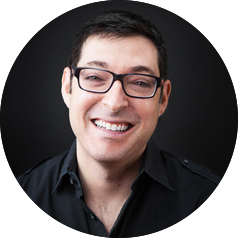
Keith Kurlander, MA, LPC is the co-founder of the Integrative Psychiatry Institute (IPI) and the co-host of the Higher Practice Podcast. The IPI is the largest training provider of clinicians in psychedelic psychotherapy. He brings a professional and personal passion toward the innovation and evolution of the field of psychiatry, psychedelic medicine and psychotherapy.

Melvin varghese phd
Psychologist and Founder @ Selling The Couch
Melvin Varghese, PhD is a licensed psychologist in Philadelphia, PA. In 2015, Dr. Varghese founded Selling The Couch, a podcast to help therapists move from clinical to online income.
On the podcast, he interviews successful practitioners about how they've built their practices, social media/marketing experts, and shares lessons as he uses our clinical skills to create an online business powered by podcasting + online courses.
The podcast is one of the top Career podcasts in Apple Podcasts, has been downloaded over 1.8 million times, and is heard in over 125 countries. Mel is a successful course creator with 240+ students and $300k+ in course sales.
More Posts

Building A Private Practice Around Nice Guy Syndrome (with Jonathan Rudiger, PsyD)
Melvin Varghese from Selling The Couch sharing on validating your course idea.

Uncomfortable Truths About Private Practice Finances (with James Childress)
Melvin Varghese with James Childress on Uncomfortable Private Practice Finance Truths

Why I’m Choosing Not to Chase Social Media Fame (And Why Many Therapists Feel the Same)
In this reflective post, Dr. Melvin Varghese shares three powerful insights on why he and many therapists are stepping back from social media fame to build slower, deeper, more sustainable businesses.

How to Use AI for Content Creation—Without Losing Your Voice with Dan Cumberland
Dan Cumberland joins STC to explore how to use AI tools without sounding like AI. We talk about how to preserve your authentic voice, boost efficiency, and create systems that support your values.

If I Were in Grad School Again: 5 Career Shifts I'd Make
Psychology grad school today is more complex than ever. Here are 5 practical and personal lessons from psychologist Melvin Varghese on what he’d do differently—and how to build a career with heart, health, and intention.
0 Comments